
An exciting, hands-on, activity-based social studies program that helps primary students learn about people and places near and far — now, long ago, and even in the future.

- Builds a solid foundation of essential social studies skills and concepts.
- Develops responsible citizens — in the community, country, and world.
- Develops multicultural awareness and sensitivity.
- Reinforces reading, writing, math, and science.
- Develops critical thinking skills.
- Integrates frequent assessment and evaluation.
- Stimulates a variety of intelligences.
- Provides learning opportunities for diverse student populations.
- Ensures success for all students.

Click image to enlarge.

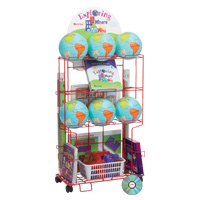
Click image to enlarge.
- Teacher’s Guides
- Atlases
- Desk, Wall, and Floor Maps
- Activity Globes
- Models
- Markers
- CD-ROMs
- EWWnet Web site
- Mobile Display Carts

The EWW teacher’s guides have solid social studies content with:
- Family Update Letters
- Assessment and Evaluation
- Literature Links
- Technology Connections
- Critical Thinking Activities
- Cross-curricular Activities
- Classroom Management Strategies
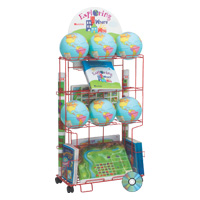
Click image to enlarge.

EWW’s hands-on and activity-based lessons help students learn through the spiraling development of basic social studies concepts and skills.

Click image to enlarge.

All K-3 students. They have a world of learning and opportunity ahead of them.

Yes! EWW incorporates the 10 Thematic Strands recommended by the National Council for the Social Studies and the 5 Themes and 6 Essential Elements of geography through age-appropriate activities that integrate civics, culture, economics, geography, and history.

Students are introduced to people and places both at home and around the world as they explore themes such as me, families, friends, seasons, holidays, town, farm, land and water, the United States, and the world.

Students explore people and places in their neighborhood and identify neighborhood needs. They look at places to live, needs and wants, workers, and rules in a neighborhood. Their view then expands to the United States and the world.

Students explore people and places in a community, focusing on goods and services, producers and consumers, government, economics, and geography. Students relate these concepts to their own community and to others in the United States and the world.

Students focus on a variety of communities and their characteristics, exploring concepts such as size, location, climate, history, and common needs, such as places to live and work, transportation and communication, laws and leaders. They look at their own community, as well as other communities in the United States and the world.
Go back to EWWnet log-in page
Check out Nystromnet for free lesson plans, printable maps, and more!
© 2026 Herff Jones, Inc. All Rights Reserved